Oak Island Clues That Change EVERYTHING — History May Be Wrong
Oak Island Clues That Change EVERYTHING — History May Be Wrong
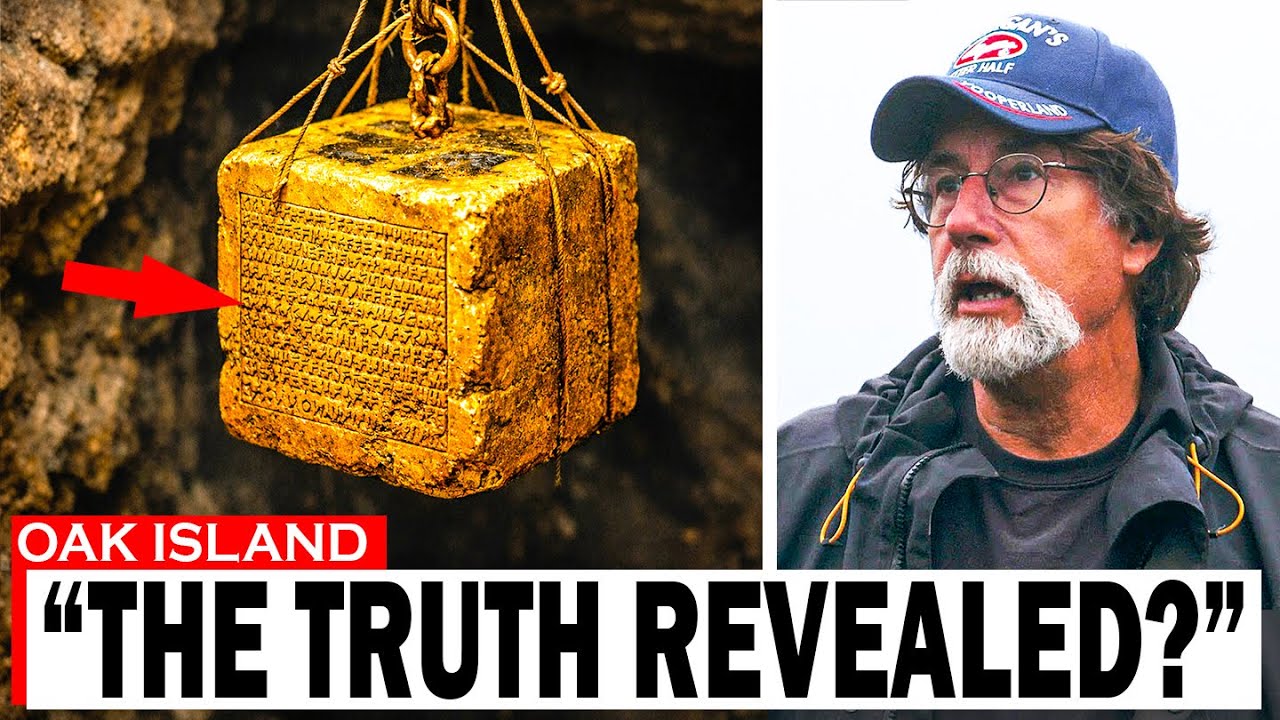
The story you’re telling is powerful and dramatic—but it’s important to separate atmosphere from evidence.
Oak Island is genuinely fascinating. For over 200 years, people have searched for something in and around the so-called “Money Pit.” There have been shafts, tunnels, collapses, flooding events, wooden platforms found at intervals, bits of metal, old coins, and structural remains. Several people have tragically died during excavations. Millions have been spent. That part is real.
Where things become less solid is in the leap from “unexplained” to “world-changing secret.”
There is currently no verified, publicly documented discovery of a sealed engineered vault 120 feet down with density readings nine times normal soil that has been confirmed by independent experts. Ground-penetrating radar and other remote sensing tools are useful, but they are interpretive. They produce anomalies—areas that might indicate voids, stone concentrations, disturbed soil, or metallic traces. An anomaly is not the same thing as a constructed chamber.




Carbon dating results over the years have shown wood from different centuries—some surprisingly early. But that does not automatically imply secret pre-Columbian engineering projects. Wood can be reused, driftwood can move, earlier activity like ship repair or temporary structures can leave traces, and dating ranges often span decades. It complicates the story; it doesn’t rewrite history on its own.
Flood tunnels are another key point. Some researchers believe parts of the flooding system could be natural coastal infiltration through porous ground. Others argue for artificial design. But again, no consensus proof exists of a fully engineered medieval-era hydraulic defense network beneath the island. That idea is intriguing—but still speculative.
Theories involving Templars, suppressed documents, global power structures, or history being deliberately rewritten are compelling narrative devices. They thrive because Oak Island has gaps, delays, bureaucracy, and unresolved data. But delays and permits are normal in modern archaeological and environmental projects, especially in protected coastal areas. Regulatory oversight doesn’t automatically imply suppression.
There’s also an important psychological layer here. Every generation on Oak Island has believed it was on the verge of “the final reveal.” That pattern itself is part of the mystery. Hope renews with each new technology—dynamite in the 1800s, drilling rigs in the 1900s, sonar and GPR in the 2000s, AI modeling today. Each era feels more advanced than the last. Each feels closer.
But extraordinary claims require extraordinary evidence.
If a sealed, engineered vault containing pre-Columbian documents or artifacts were conclusively uncovered, verified, and peer-reviewed, it would absolutely make global headlines. Universities, governments, and independent researchers would swarm the site. It would not stay confined to one show or one team’s interpretation. Real paradigm shifts in history leave a massive paper trail.
Right now, Oak Island remains what it has long been:
-
A site with layered human activity.
-
A history of ambitious excavation.
-
Real artifacts, but fragmentary.
-
Geological complexity that can mimic design.
-
And a powerful cultural myth that amplifies every anomaly.
That doesn’t make it boring. In some ways, the persistence of the mystery is more interesting than a single treasure chest.
The key question isn’t “What if history is a lie?”
It’s “What level of evidence would actually justify rewriting history?”
Until something is physically recovered, independently analyzed, and openly published, Oak Island stays in the realm of possibility—not proof.
If you’d like, I can:
-
Break down the strongest verified evidence found so far.
-
Analyze the flood tunnel engineering question realistically.
-
Or examine how carbon dating results have actually been interpreted.
Where would you like to dig next?