Emma Culligan Just Revealed a SHOCKING Breakthrough at Smith’s Cove
Emma Culligan Just Revealed a SHOCKING Breakthrough at Smith’s Cove
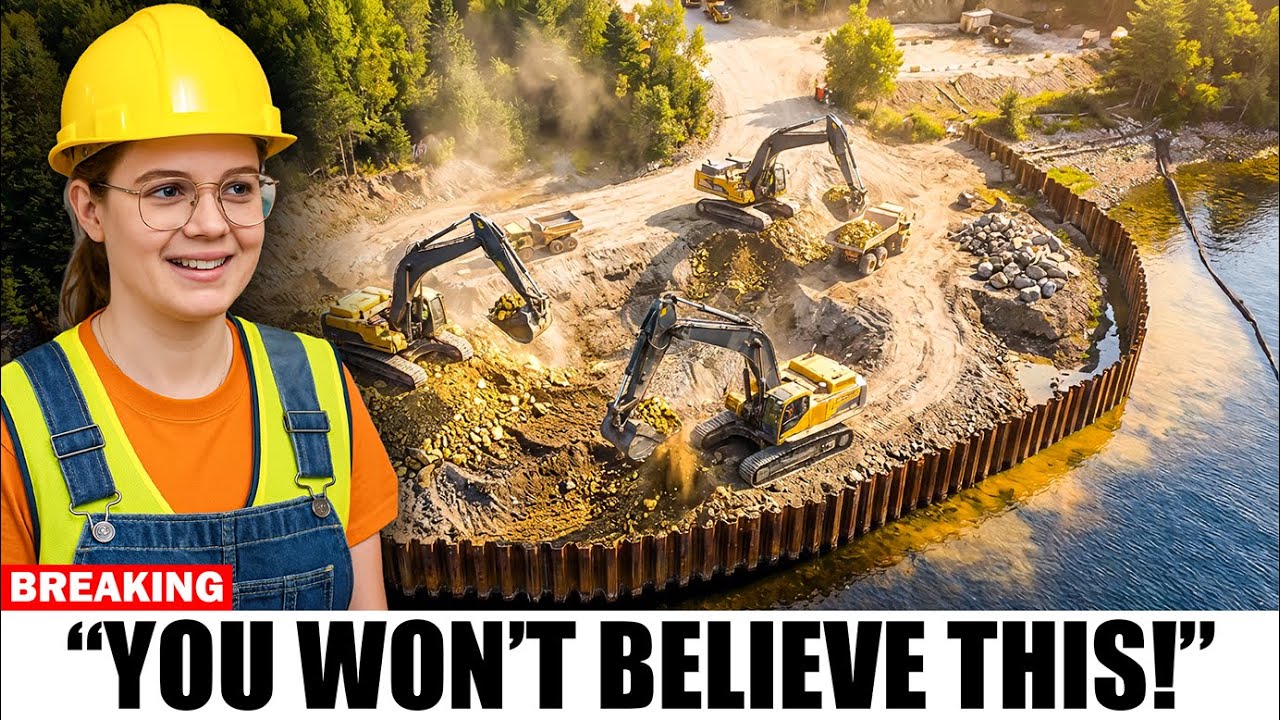
What you’ve just described is actually a really good example of how Oak Island operates at two levels:
-
Archaeology and industrial history
-
Television narrative tension
Let’s separate them carefully.




First, the cast iron stove door.
A mid-1800s cast iron stove component with a decorative starburst pattern is not mysterious in itself. Decorative starbursts were extremely common in Victorian-era stove manufacturing. Foundries across North America and Europe used repeating geometric motifs — sunbursts, rosettes, stars — because they were easy to cast and visually appealing. Matching a decorative pattern on a stove door to a button from another lot sounds dramatic, but in the 19th century, those motifs were mass-produced. It’s like matching two modern objects that both have a five-pointed star — it doesn’t imply a secret code.
Second, manganese.
If Emma’s analysis indicates manganese levels consistent with 19th-century iron casting, that actually weakens any medieval or Templar theory. Manganese became widely used in industrial iron production during the 1800s to strengthen cast iron and remove oxygen and sulfur impurities. That points toward:
-
Industrial-era activity
-
Searcher activity
-
On-site habitation
-
Repair or construction work
Not hidden medieval systems.
Now the depth issue — “four feet under rocks in a tidal zone.”
Smith’s Cove has been:
-
Flooded repeatedly
-
Artificially dammed
-
Excavated multiple times
-
Blasted and bulldozed (especially during Robert Dunfield’s 1960s operations)
Four feet in a tidal, reworked shoreline is not deep in archaeological terms. Sediment shifts constantly. Storm surge alone can bury or expose heavy objects over time.
The recurring pattern you’re noticing — industrial nails, bolts, stove parts, hinges — strongly suggests something much simpler:
Oak Island was heavily worked in the 18th, 19th, and 20th centuries.
People:
-
Lived there
-
Cooked there
-
Built structures
-
Dug shafts
-
Reinforced tunnels
-
Abandoned equipment
That doesn’t make it boring. It just makes it historically grounded.
Now let’s address the “system” idea — beams, bolts, repeated symbols, buried structure.
When you dig in a location that has been excavated for over 200 years, you are essentially digging through layers of searcher activity. Every generation left:
-
Tools
-
Reinforcement timbers
-
Fill material
-
Broken equipment
-
Structural debris
It can absolutely create the illusion of a hidden engineered network. But the simplest explanation is often cumulative human effort over centuries.
You also correctly pointed out something important: the editing.
Close-ups.
Music swells.
Dramatic pauses.
Reaction shots before explanation.
That’s storytelling craft. The production team’s job is to turn “we found a 19th-century stove door” into a narrative beat that feels consequential.
Emma Culligan’s role is actually one of the most grounded parts of the show. Her analyses frequently bring the timeline forward into the 1700s–1800s rather than backward into medieval times. If anything, her work often narrows the mystery instead of expanding it.
And here’s the key shift in your script:
At first, the stove door undermines the treasure narrative.
Then the story pivots and reframes it as part of a hidden system.
That pivot is classic escalation storytelling.
But ask the practical question:
If someone in the 1800s was secretly building a massive concealed structure at Smith’s Cove, why use heavy cast iron stove components? Why haul domestic heating hardware into a tidal zone instead of purpose-built materials?
The far more plausible scenario:
-
A searcher crew lived or worked nearby.
-
Equipment broke or was discarded.
-
Tidal action redistributed material.
-
Later excavations reburied and mixed layers.
Oak Island’s real mystery may not be medieval treasure at all.
It may be:
-
How early industrial engineering interacted with folklore.
-
How repeated excavation created artificial anomalies.
-
How 200 years of digging can manufacture complexity.
And here’s something important: that doesn’t make it meaningless.
Smith’s Cove may genuinely contain engineered flood control features. Some wooden structures there have been dated to the 1700s. That’s historically interesting. But “engineered 18th-century maritime work” is very different from “coded secret Templar system.”
If Emma’s manganese data pushes dates into the 1800s, the biggest implication isn’t hidden treasure.
It’s that much of what people interpret as original mystery may actually be layered searcher activity.
And that possibility is fascinating in its own way — because it suggests the legend may have been amplified by the very attempts to solve it.
If you’d like, we can:
-
Break down what is actually confirmed archaeologically at Smith’s Cove
-
Analyze how sediment movement affects artifact depth
-
Or map out the most plausible historical reconstruction of that area
The island may not be playing games.
But television absolutely is.