Denny Hamlin’s SHOCKING Response to NASCAR Penalty Has Everyone Talking!
Denny Hamlin's SHOCKING Response to NASCAR Penalty Has Everyone Talking!
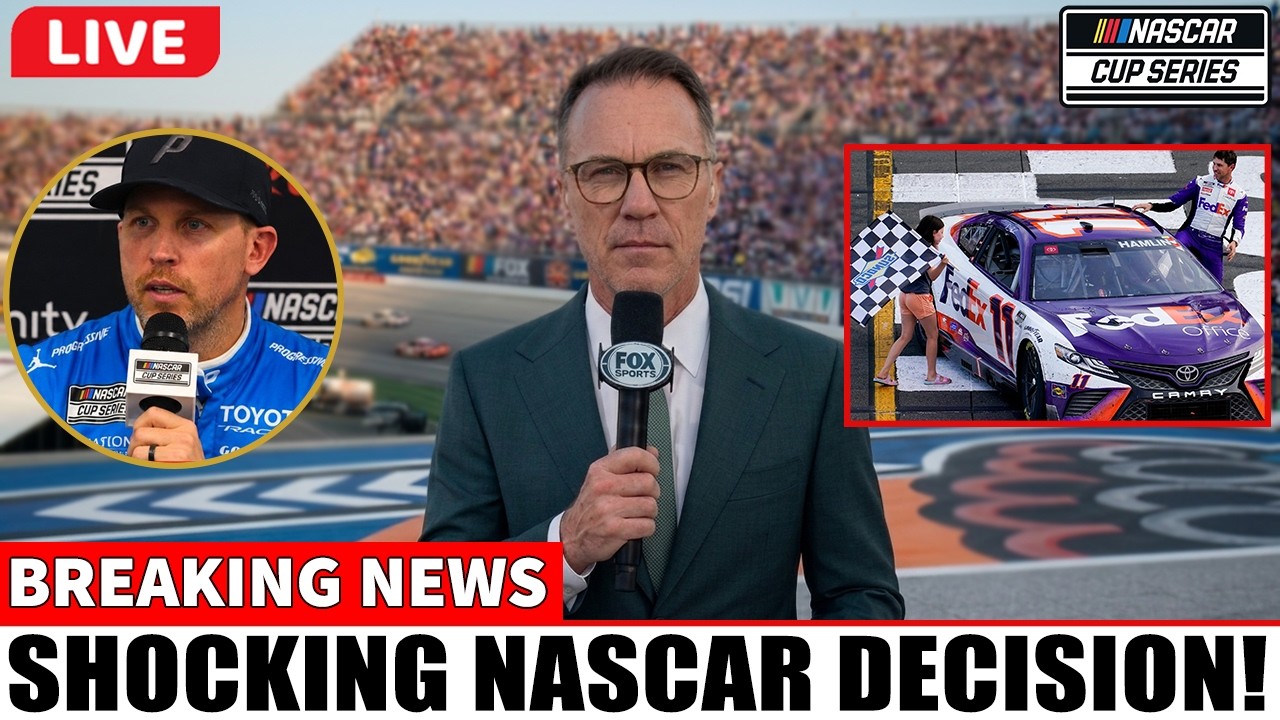
Denny Hamlin’s Retirement Timeline and NASCAR’s Latest Penalties Spark Major Debate
A pair of developments from the NASCAR world have ignited conversation across the garage and among fans, raising questions about the future of the sport, competitive accountability, and the legacy of one of its biggest stars.
Denny Hamlin Sets a Target Retirement Date
Despite enjoying one of the strongest seasons of his career, Denny Hamlin has revealed that he still plans to step away from full-time competition in the NASCAR Cup Series after the 2027 season.
The announcement surprised many observers because Hamlin remains one of the sport’s top performers. He recently captured a victory at Nashville Superspeedway and has consistently been among the frontrunners throughout the season.
According to Hamlin, the decision is not based on declining performance but rather a desire to leave the sport before experiencing a significant drop-off in competitiveness. He explained that he wants to retire while still believing he can win races and contend for championships.
Hamlin emphasized that he would rather leave fans wondering if he could have continued than stay long enough for people to question whether he should have retired earlier.
Comparing NASCAR to Other Sports
During discussions about his future, Hamlin addressed comparisons to athletes such as LeBron James, who has remained productive well into his forties.
Hamlin argued that racing differs from traditional team sports because a driver’s performance cannot be easily compensated for by teammates. In his view, even a slight decline in driving ability can dramatically affect championship aspirations.
For Hamlin, confidence remains a key factor. The moment he no longer believes he can realistically compete for a title may be the moment his motivation disappears.
What It Means for Joe Gibbs Racing
The potential departure of Hamlin would create a significant challenge for Joe Gibbs Racing.
As one of the most successful active drivers in NASCAR, Hamlin has become a central figure within the organization. His eventual retirement would leave a major competitive and leadership void that the team will need years to prepare for.
Adding intrigue to the situation is the possibility that Hamlin could finally secure the NASCAR Cup Series championship that has eluded him throughout his career. A title could either reinforce his retirement plans or convince him to continue racing longer than expected.
NASCAR Issues Truck Series Penalties
While Hamlin’s comments dominated headlines, NASCAR also released disciplinary actions following the Nashville race weekend.
The most notable competition-related penalty involved the No. 99 team of ThorSport Racing after a wheel detached from the truck driven by Ben Rhodes during the race.
NASCAR responded by suspending two crew members for two races:
- Evan Clay (jackman)
- Pedro Martinez (rear tire changer)
The suspensions highlight NASCAR’s continued emphasis on safety and its strict stance toward loose-wheel violations, which are considered serious risks to drivers, teams, and spectators.
Indefinite Suspension Draws Attention
Perhaps the most surprising disciplinary action involved an indefinite suspension issued to Quinty Thunderbird.
Although NASCAR provided limited details regarding the circumstances, indefinite suspensions are relatively rare and typically indicate a violation considered especially serious by the sanctioning body.
The decision has attracted attention throughout the garage because such penalties often send a broader message about accountability and compliance with NASCAR regulations.
A Sport in Transition
Taken together, the two stories illustrate a larger theme emerging within NASCAR.
On one hand, veteran stars like Hamlin are beginning to think seriously about the end of their careers, forcing teams and fans to consider what the next generation of leadership will look like.
On the other hand, NASCAR continues tightening enforcement and emphasizing safety, reinforcing that competitive success cannot come at the expense of following the rules.
As the sport moves forward, both developments reflect a NASCAR environment where every decision—whether made behind the wheel, on pit road, or in the boardroom—can have lasting consequences.