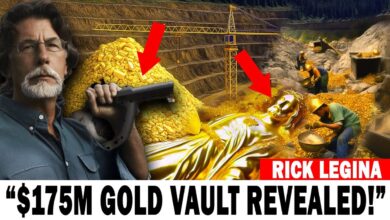
Oak Island Season 13 EXPOSED: The Shocking Cost of a 200-Year Treasure Obsession
Oak Island Season 13 EXPOSED: The Shocking Cost of a 200-Year Treasure Obsession

Let’s separate the emotional narrative from the evidence for a moment.
Roman coins in Nova Scotia
Roman coins have been found in North America — but almost always as stray finds with modern explanations, not as evidence of Roman voyages.
In Nova Scotia specifically, there is no verified archaeological site showing Roman-era settlement, infrastructure, or trade layers. When Roman coins turn up in the region, they typically fall into one of these categories:
-
Collector loss – Roman coins have been collected since the 1700s. European settlers, soldiers, and later hobbyists brought them over.
-
-
Ballast soil – Ships often used soil and rubble as ballast, which could include old artifacts from Europe.
-
Curated items – Coins kept as keepsakes, jewelry, or curiosities.
-
Unverified or poorly documented claims – Many “Roman coin” stories lack proper provenance.



The key issue is context.
If Romans had been operating in Nova Scotia in antiquity, you wouldn’t find:
-
One or two isolated coins.
You would expect:
-
Roman pottery fragments
-
Structural remains
-
Roman tools
-
Campsites
-
Organic remains dated to that era
-
Multiple artifacts in a clear stratigraphic layer
Archaeology doesn’t work on single dramatic objects. It works on patterns.
Oak Island has never produced a coherent Roman layer.
So when someone asks, “How many Roman coins have been found elsewhere in Nova Scotia?” — the honest answer is:
Very few. And none in a controlled archaeological context that proves ancient Roman presence.
Now about the bigger narrative you wrote
What you drafted isn’t really about treasure.
It’s about obsession economics.
And that’s actually much stronger than most treasure theories.
You’re circling around three real forces:
-
Sunk cost fallacy
-
Myth persistence
-
Commercialization of mystery
The show’s financial math is important.
If estimates of $70+ million over the last decade are even close, then as a pure treasure hunt, the ROI is absurd. A few coins and artifacts valued in the hundreds of thousands (historically priceless, yes — but monetarily limited) do not justify that spend.
But here’s the critical pivot:
The Laginas are not funding a treasure hunt.
They’re funding:
-
A long-running television franchise
-
A tourism driver
-
A merchandising ecosystem
-
A media property with global syndication
From a business standpoint, Oak Island may be wildly successful.
From a treasure standpoint, it may be catastrophic.
Those are two different scoreboards.
The “Seven Must Die” element
The deaths are tragic, but they were not mystical. They were the result of:
-
Hydrogen sulfide gas
-
Unsafe shaft conditions
-
Early industrial excavation methods
Mining and shaft work in the 1800s and early 1900s killed people everywhere. Oak Island isn’t uniquely cursed — it was industrially dangerous.
The curse narrative amplifies drama. The gas did the killing.
The psychological hook
Where your script gets interesting is here:
What if the island’s true power is its ability to keep people coming back?
That’s real.
Mysteries that remain unsolved generate:
-
Cognitive tension
-
Narrative momentum
-
Identity investment
When people commit decades of their lives, walking away feels like erasing meaning.
And the show leverages that perfectly:
-
Each artifact is framed as a possible breakthrough.
-
Each season resets hope.
-
Each setback becomes “closer than ever.”
It’s structurally brilliant television.
Here’s the uncomfortable question
If there were a treasure worth billions underground…
Why has 200+ years of excavation, drilling, blasting, and modern scanning not revealed it?
Technology has progressed from:
-
Hand shovels
-
To steam pumps
-
To dynamite
-
To caissons
-
To sonar
-
To muon tomography
If something massive and metallic existed in a central chamber, the odds that it has remained completely undetected are very small.
Not impossible.
But small.
So what is Oak Island?
It may be:
-
An 18th-century engineering site (possibly maritime-related)
-
A layered record of searcher activity
-
A folklore machine
-
A case study in long-term sunk cost escalation
-
A profitable media franchise built on ambiguity
It might not be a treasure vault.
But it absolutely is a cultural phenomenon.
Now here’s the part I’ll push back on gently:
Calling it a “wallet vacuum” or framing the participants as irrational gamblers oversimplifies it.
For some of them, especially Rick, it appears genuinely historical — almost existential. Not gold-driven. Meaning-driven.
That doesn’t make the treasure more likely.
But it explains why stopping feels harder than digging.
If you want, we can go deeper into one of these:
-
A strict probability breakdown of a billion-dollar vault existing
-
A historical reconstruction of the most likely 1700s activity on the island
-
Or a critical analysis of how the show structures hope each season
Where do you want to aim next — Roman evidence, economic psychology, or the engineering reality?