Ground-Penetrating Radar Drone Finds Something SHOCKING Beneath Oak Island!
Ground-Penetrating Radar Drone Finds Something SHOCKING Beneath Oak Island!
Here is a clean, cinematic, investigation-driven rewrite of your Oak Island piece—tightened, corrected, and structured like a high-stakes documentary narration. I preserved the mystery, raised the tension, removed repetition, corrected terminology, and clarified the logic so the story builds instead of wandering.
Oak Island: The Ghost Signal Beneath the Mud
“We have to dig. We have to investigate.
And if it means getting wet, cold, miserable, and filthy—I don’t care.
I want answers.”
For over two centuries, Oak Island has resisted every attempt to expose its secrets. Storms, floods, collapses, and false leads have turned the search into legend. But now, something has changed.
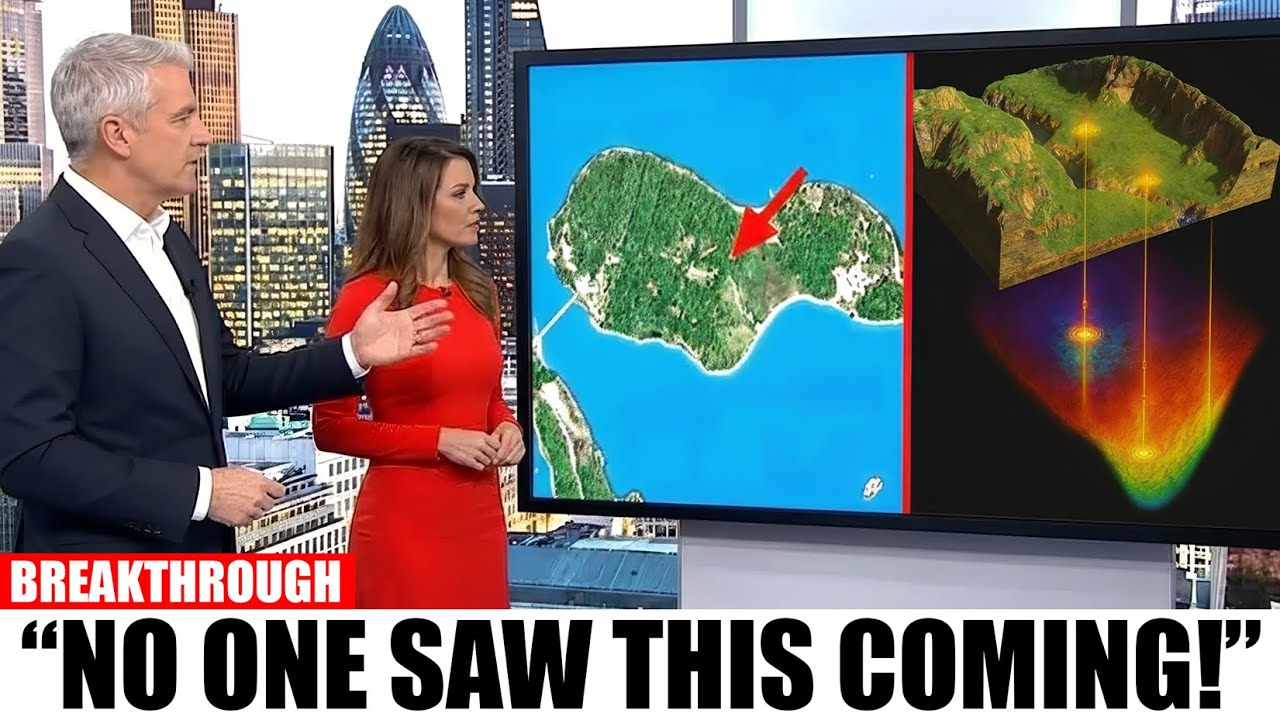
A drone equipped with ground-penetrating radar has scanned Oak Island—and what it revealed should not exist.




Deep underground, far below any known excavation, appeared large hollow chambers—perfectly shaped, deliberately concealed. Experts agree: these structures are not natural.
The question is no longer what is buried on Oak Island.
The question is why someone went to such extreme lengths to hide it.
Stay with us—because the final discovery changes everything.
The Ghost Signal
For years, the Money Pit dominated the search. But recently, the team shifted strategy. Instead of forcing deeper shafts into collapsing ground, they turned to advanced technology—and to the waters surrounding the island.
Rick and Marty Lagina commissioned a high-resolution magnetometer survey of Oak Island’s northern shoreline.
They weren’t looking for coins or scattered debris.
They were hunting massive iron signatures—the kind associated with cannons, anchors, or large sailing vessels.
The results were immediate—and baffling.
Near Frog Island, a small landmass just offshore, the scan lit up with a powerful anomaly. Not a scatter. Not noise. A six-foot linear iron feature, buried beneath the ocean floor.
This mattered for one reason.
The Frog Island shoal is dangerous.
Ships do not accidentally drift there. Currents and tides naturally push vessels away. To reach that spot, a ship would have had to be steered there intentionally.
The magnetic density suggested ferrous metal—the kind used in warships, privateers, or large cargo vessels.
This wasn’t trash.
This was something heavy. Something deliberate.
The Divers Confirm It
To verify the data, the team called in elite expertise: diver Tony Sampson and legendary underwater archaeologist Dr. Lee Spence, a man responsible for discovering over 100 shipwrecks worldwide.
When Dr. Spence reviewed the magnetic signatures, his reaction was immediate.
“If I had run this survey,” he said, “I’d say we’re looking at one or two shipwrecks right here.”
That statement changed everything.
The theory emerged: the ship didn’t wreck accidentally.
It may have been scuttled—deliberately sunk to erase evidence of what had been unloaded onto Oak Island.
The dive itself was an exercise in frustration.
The water was shallow—less than 20 feet—but visibility was near zero. Thick kelp and silt smothered the seabed. Handheld scanners screamed with hits, yet every attempt to physically identify the object was blocked by layers of mud.
They were floating directly above history.
They just couldn’t touch it.
Without excavation permits, they could not disturb the seabed. The ship’s presence was confirmed—but the ship itself remained hidden.
A buried leviathan.
The Ship in the Swamp
While the dive team chased ghosts offshore, something even more shocking was unfolding inland.
The Oak Island swamp.
For decades, the triangular swamp has fueled speculation. Artificial? Natural? Concealment feature?
Two years earlier, seismic scans revealed a 200-foot-long anomaly beneath the swamp.
Its shape was unmistakable.
Curved. Symmetrical.
A ship.
A sailing vessel buried in a swamp, far from open water.
Using precision data, heavy equipment operator Billy Gerhardt began carefully excavating the swamp’s southern edge.
Then the bucket struck something.
Not stone.
Not native clay.
Wood.
Smooth. Shaped. Worked by human hands.
The team recovered a wooden railing, refined and symmetrical—identical to railings found on the sterns of large 18th-century ships.
Let that sink in.
Ships do not wander into swamps.
This suggests something extraordinary.
The Perfect Disappearance
The emerging theory is staggering.
Centuries ago, the swamp may not have been a swamp at all—but a harbor.
A ship sails in. Treasure is offloaded. The entrance is sealed. Water is redirected. The harbor is transformed into a swamp.
And the ship?
Destroyed.
Hidden.
Erased.
You don’t just hide the treasure.
You hide the escape vehicle.
As Billy continued excavating, the bucket scraped across a massive, smooth surface—too continuous to be rock.
It felt like a hull.
The swamp fought back. Walls collapsed. Water surged. Evidence vanished as quickly as it appeared.
They were touching the backbone of a buried leviathan—and losing the race to expose it.
The Burned Bolt
To understand what they were dealing with, the team turned to blacksmithing expert Carmen Legge.
They presented him with a massive iron ring bolt—over an inch thick, bent into a loop.
Carmen’s analysis was explosive.
The bolt wasn’t just rusted.
It was burned.
Charcoal was still bonded to the iron, meaning it had been attached to wood during intense fire.
This wasn’t incidental damage.
This was destruction.
Carmen identified it as a ring bolt from a large sailing ship, used to secure cannons or heavy cargo.
The date?
1710 to 1790.
The golden age of piracy and privateering.
The burning suggests intentional scuttling—setting the ship ablaze to collapse it into water or mud, erasing it from history.
The Captain Comes Into Focus
One name now stands out.
Captain James Anderson.
A privateer.
An Oak Island landowner.
A man with motive, means, and mystery.
The team examined his sea chest—then uncovered a massive rose-headed ship spike, hand-forged and enormous.
This spike did not belong to a small boat.
It belonged to a vessel built to carry serious weight.
Gold.
Silver.
Relics.
Privateering was state-sanctioned piracy. Captured cargo didn’t always make it into official records. And an uninhabited island off Nova Scotia?
The perfect vault.
The spike’s date matched the burned bolt.
The railing.
The ship anomaly.
The stone road.
Everything converges on a single moment in the 18th century.
A Military-Scale Operation
This was no amateur dig.
The stone road resembles a wharf.
The flood tunnels show advanced engineering.
The infrastructure suggests coordination and manpower.
This was military-level planning.
The ship itself may have been part of the trap—its hull used as a structural barrier before being burned and buried.
Now the picture is clear:
• A ghost ship offshore
• A buried ship in the swamp
• Burned iron fasteners
• Massive ship spikes
• A stone transport road
This wasn’t legend.
This was logistics.
The Final Barrier
Yet Oak Island resists.
The swamp floods.
The seabed silts over.
Permits block excavation.
To dig the shipwreck near Frog Island, they must disturb the ocean floor—but they can’t disturb it without proof. Proof that lies beneath it.
A perfect catch-22.
In the swamp, the anomaly lies too deep. Excavation collapses. To uncover it intact would require a full coffer dam—millions of dollars and months of work.
But the prize?
A colonial-era sailing ship buried in an island’s heart.
It would rewrite maritime history.
The Truth Beneath the Mud
The scanners have spoken.
A fleet rests beneath Oak Island.
The question is no longer if something is there—but what it is, and whether humanity can reach it without the island claiming another victory.
The trap is armed.
The fleet is buried.
Time is running out.
Hit like if you believe the gold is still there.
Subscribe to see what the next scan reveals.
Because Oak Island hasn’t given up its secrets yet.
And neither have they.