Black Woman SHUTS DOWN Woke Activist… SHE HAD INSTANT REGRET
Black Woman SHUTS DOWN Woke Activist… SHE HAD INSTANT REGRET
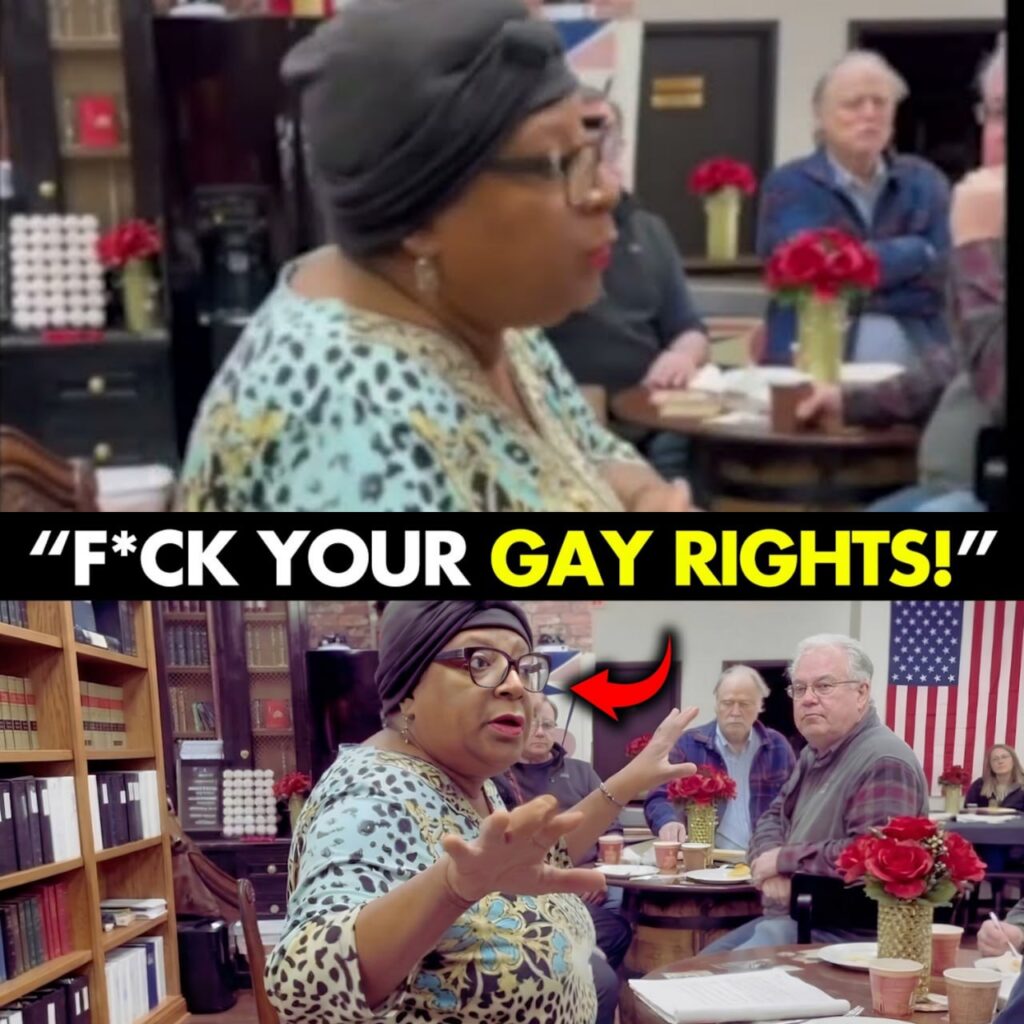
Black Woman Shuts Down Woke Activist in Explosive Exchange, Sparks Nationwide Debate
In a fiery exchange on a widely viewed TV segment, a black woman stunned viewers by shutting down a woke activist with a response so sharp and unapologetic, it left many in awe. The conversation, which centered on race, politics, and the role of black women in today’s political and social landscape, quickly escalated when the woman called out the hypocrisy and flaws within the so-called diversity and inclusion policies being pushed by today’s progressive left.Politics
The Triggering Comment
The debate began with the activist making a sweeping statement about the Democratic Party’s promotion of black women, particularly those from marginalized identities, such as lesbians. The activist argued that black women were being promoted based on their identities rather than their qualifications, a sentiment that immediately struck a nerve. “They’re promoting black women who aren’t even qualified,” the activist claimed, referencing high-profile figures like Dr. Claudine Gay, the newly appointed head of diversity at Harvard University.
The conversation took a deeper turn when the activist made a connection between current social policies and the breakdown of black families. Citing the past policies of the 1960s and beyond, the activist argued that the Democratic Party’s promotion of policies that encouraged single motherhood in black communities had long-term detrimental effects, including generational poverty and dysfunction.Family
“These policies, which told black women they didn’t need men in the home, have destroyed the black community,” the activist asserted. “We have women with eight children by five different fathers, and many of these children don’t know who their fathers are. This is the result of the policies Democrats pushed.”


The Response That Shut It All Down
That’s when the black woman, who had been sitting quietly during the activist’s tirade, spoke up. Her response was calculated, direct, and full of conviction.
“You’re wrong,” she said firmly, her tone cutting through the noise. “The problem isn’t about whether or not black women are qualified, it’s about the constant attempts to push us into boxes based on what makes people comfortable. We’re not here for your convenience, nor for your narrative. We’re here to be seen as capable, as real people, not as a demographic you can use to fit your politics.”
Her words hit hard, striking a chord with both the activist and the audience. It was clear that she wasn’t just speaking from a place of frustration; she was speaking from a lifetime of experience and deep understanding. She continued, addressing the activist’s claims about the breakdown of black families.
“You talk about broken homes and dysfunction, but where were the policies that empowered black men? Why is it always the black woman who bears the brunt of this narrative? Why do we only talk about black women’s supposed failures, but we never address the systems that have been designed to keep us down, to divide families, and to separate black men from their communities?” she demanded.
The activist appeared visibly taken aback by the woman’s blunt response. It was evident she had not expected such a forceful rebuttal. For a moment, the studio fell silent, with the audience in rapt attention. The black woman had not just shut down her opponent; she had exposed the deeper issues at play, reminding everyone of the complexities that were being oversimplified in the debate.
The Rise of Black Women’s Voices
As the conversation unfolded, the black woman began to reflect on the broader issue of how black women, particularly in politics, have often been used as pawns for larger political agendas. From the time of the Civil Rights Movement to today’s struggles for social justice, black women have long been expected to carry the weight of society’s problems while being pushed into roles that are limited by others’ expectations.
“The system wants to make black women feel like we owe them something,” she said. “We are constantly put in situations where we are either too much or not enough. We are told to stay in our lane, but when we do, we’re still criticized for not fitting into the very narrow roles they’ve defined for us.”
Her words resonated deeply with viewers, many of whom applauded her for her honest, no-nonsense approach to the issues. “Why do black women always have to be the scapegoat?” she asked rhetorically. “Why is it that when we speak out, we’re labeled as angry or problematic? Why do we have to fight twice as hard to be heard, while others get to speak with ease?”
Her response became a turning point in the conversation, moving beyond personal politics and into a larger critique of the racial and gender dynamics at play in today’s political climate. She was not just talking about black women in politics; she was discussing the treatment of black people as a whole and how they were often forced to fit into pre-defined narratives.Politics
The Backlash and Regret
After the debate, the activist found herself facing heavy backlash from her supporters and others in the media. Many people felt that the activist’s arguments about “promoting unqualified black women” were not just misplaced but dangerous. They argued that such rhetoric perpetuated harmful stereotypes and further divided communities rather than bringing them together.
The activist, perhaps realizing the impact of her words, issued an apology. “I regret how my comments were interpreted,” she said. “In hindsight, I realize I could have framed my points differently. I never meant to discredit the worth or abilities of black women; I was merely addressing concerns about the broader political landscape.”
But by then, the damage had been done. The debate had spiraled into a larger conversation about the intersection of race, gender, and politics, and the activist’s attempts to retract her statement only fueled the controversy further. It became clear that her initial comments had struck a nerve because they touched on deeper, more entrenched issues within the political landscape—issues that people were unwilling to let slide.
The black woman who had shut her down, meanwhile, found herself lauded for her courage in speaking truth to power. Many commentators pointed out that her unwavering stance was a reflection of the growing influence and visibility of black women in today’s political discourse. Her refusal to back down in the face of scrutiny had earned her the respect of those who valued integrity and authenticity over political correctness.
The Woke Debate: More Than Just Politics
The incident sparked wider conversations about the so-called “woke” movement and its influence on contemporary politics. While the movement has been praised for bringing attention to racial and social issues, many critics argue that it has become overly focused on virtue signaling and identity politics, often at the expense of addressing the root causes of inequality.
Critics of the woke agenda argue that it often serves to divide rather than unite people. They contend that by focusing too much on identity, the movement misses the point of true inclusivity, which should be about elevating all people, regardless of their background or appearance, based on their talents, qualifications, and character.
The debate about woke culture, political correctness, and identity politics is far from over. In fact, it has only intensified in recent months, as activists and commentators from all sides of the political spectrum weigh in on the direction that society should take.
The Broader Implications for the Black Community
For the black community, this debate has significant implications. The black woman who shut down the woke activist didn’t just stand up for herself; she stood up for all those who have been marginalized and pushed aside by both political sides. Her response was a call to action, urging people to look beyond surface-level politics and to engage in meaningful dialogue that addresses the real issues at hand.
She also emphasized the importance of self-determination, urging black people, especially black women, to take control of their own narratives and not let anyone—be it a politician, activist, or media figure—define who they are or what they can achieve. “We are not here to fulfill anyone’s agenda. We are here to live authentically and to fight for a better future for ourselves and our children,” she concluded.
Conclusion: A Moment of Clarity
As the dust settled after the heated exchange, it was clear that the debate had touched on some of the most contentious issues facing the country today. It wasn’t just about black women in politics; it was about the broader political landscape and the ways in which race, gender, and power are intertwined in the fight for equality.Politics
The black woman who stood her ground in the debate had shown that courage, conviction, and truth can sometimes be the most powerful tools in dismantling divisive ideologies. While the activist may have regretted her words, the larger conversation about identity politics, the black community, and the role of women in politics was far from over. The debate, it seems, is only just beginning.
The question remains: will America’s political landscape ever move past the polarized, identity-based divisions that have come to define the debate? Or will we continue to fight within the confines of a broken system, where identity and politics take precedence over real progress and change?
The only certainty is that the conversation is far from over, and as more voices—like the black woman who shut down the woke activist—rise to challenge the status quo, the future of American politics may very well change forever.